
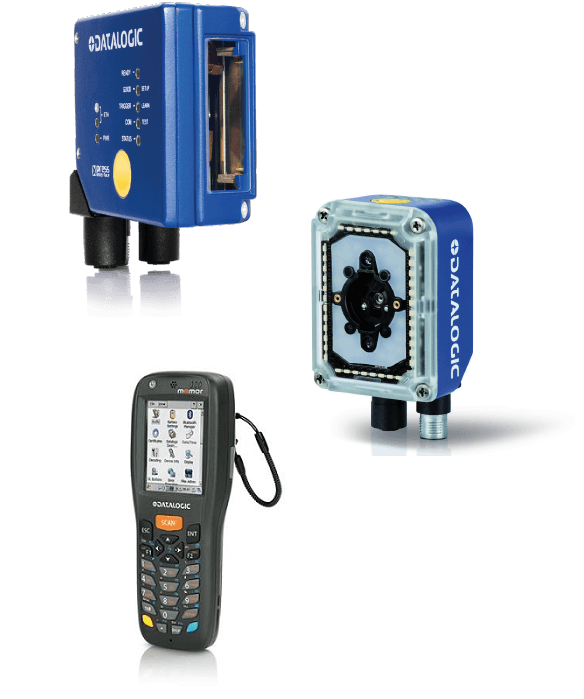
The barcode reader is one of the most common devices in industry and retail, but it’s worth understanding exactly what it is, what types exist and what role it plays in traceability. This article gives a clear definition and connects it with automated code reading on production lines.
Definition: what a barcode reader is
A barcode reader is a device that captures and decodes the information contained in a printed code (1D barcodes or 2D DataMatrix/QR) and turns it into data a system can process. In essence, it “serves to read barcodes” and translate them into an identifying number or text.
What kind of device it is and how it works
It is an optoelectronic device: it lights the code, captures the reflected light and a sensor interprets the pattern of bars and spaces. From there, software validates the code and links it to a product, batch or shipment. It can be handheld, fixed on a line or integrated into a vision system.
Types of readers
- Wand (pen-type reader): slid across the code; simple and cheap, now rarely used in industry.
- Laser barcode scanner: projects a beam and reads 1D codes at a distance.
- Image-based reader (camera): takes a photo and decodes 1D and 2D; the standard for DataMatrix codes.
- Machine vision reading: fixed cameras that read at high speed on the line itself, also verifying quality and traceability.
From the handheld reader to industrial code reading
In production, reading can’t depend on an operator. Vision-based code reading systems read 100 % of units at line speed, validate that the code is legible and correct, and feed traceability. It’s the leap from the handheld reader to automated, integrated reading.
At AIS Vision Systems we implement 1D/2D code reading and automatic identification (Auto-ID) solutions in-line. Tell us your reading need and we’ll solve it.