GS1 Sunrise 2027: how to prepare for the shift to 2D barcodes
19 - 03 - 2026
Product identification is entering a new phase. For decades, 1D barcodes have been the standard for retail and many supply chain operations. But today, businesses need more product data, stronger traceability, better inventory control and a closer connection between physical products and digital systems. In this context, GS1 Sunrise 2027 is becoming a key milestone in the move toward 2D barcodes.
What is GS1 Sunrise 2027?
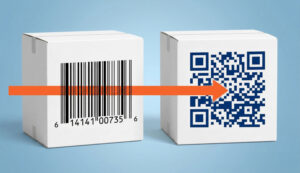
GS1 Sunrise 2027 is the global initiative driving the transition from traditional linear barcodes to more capable 2D symbols such as GS1 DataMatrix and QR Codes powered by GS1 standards. The goal is for point-of-sale systems to be ready to read and process both 1D and 2D barcodes, enabling a gradual transition without disrupting current operations.
Unlike 1D barcodes, 2D symbols can hold much more information in a single code. In addition to the GTIN, they can carry data such as batch or lot number, expiry date, serial number and digital links through GS1 Digital Link. This makes it possible to improve traceability, strengthen product authentication and provide more useful information to logistics teams, retailers and consumers.
Why 2D barcodes matter for industry
The move to 2D barcodes should not be seen only as a standards update. It is also a practical opportunity to improve operations. With one code, companies can reduce identification errors, automate data capture and improve visibility across the supply chain.
2D barcodes also support critical processes such as product recalls, shelf-life control, serialization and authenticity checks. They can also connect packaging to richer web-based content, which is especially valuable in markets where transparency, sustainability and customer experience matter more than ever.
How to prepare for GS1 Sunrise 2027
The first step is to review which products, packaging formats and production lines will need 2D codes and what information those codes should contain. The next step is to assess whether current printing, reading and inspection systems can generate and verify 2D symbols at the required quality level.
It is also important to check whether shop-floor software, ERP, WMS or MES platforms and data capture devices can correctly process the additional data encoded in 2D barcodes. In many cases, the transition will not be a sudden replacement, but a phased implementation in hybrid environments where 1D and 2D codes coexist for a period of time.
How AIS Vision Systems can help
At AIS Vision Systems, we help manufacturers prepare for this transition with vision, reading and inspection solutions focused on quality control and traceability. Adapting to GS1 Sunrise 2027 is not just about printing a new symbol. It is about making sure that the code is readable, verifiable and fully integrated into the production process.
The right combination of barcode reading, verification and machine vision systems helps ensure that every 2D code is captured correctly, that the associated data is reliable and that production keeps moving without disruption. That is essential for meeting new market expectations and improving operational performance.
Prepare today to stay competitive tomorrow
GS1 Sunrise 2027 will be a major shift in product identification. Companies that start preparing now will have more time to validate processes, upgrade equipment and move to 2D barcodes in a controlled way.
If your business wants to improve traceability, increase barcode reading reliability and get production lines ready for new standards, AIS Vision Systems can help you define the right strategy for the next step.