
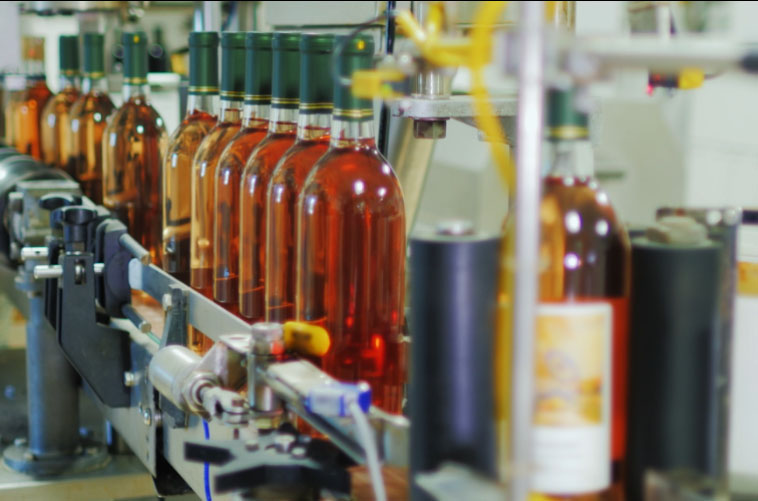
Machine vision in the wine industry has become an essential ally for making sure every bottle leaves the line in perfect condition. In a sector where brand image and the perception of quality mean everything, a single defect —a crooked label, an incorrect fill level or a poorly seated closure— can damage a winery’s reputation. In this guide we explain how machine vision automates quality control during bottling and what it inspects at each stage.
Why wine needs automated inspection
Wine bottling combines high speed, glass containers with complex reflections and an enormous variety of formats, labels and capsules. Manual or sampling-based inspection cannot cover 100 % of production at those rates without fatigue or errors. Machine vision, by contrast, analyses every bottle applying the same criteria at line speed, ensuring that no defective unit reaches the customer.
Fill level control
One of the most common inspections is fill level verification. The system checks that the wine reaches the correct height inside the bottle, detecting under- or over-filling that may stem from faults in the filler. This prevents complaints, ensures the declared quantity and protects product consistency.
Label and back-label inspection
The label is the face of the product. Machine vision verifies that it is present, correctly positioned, free of wrinkles and bubbles, properly aligned with the back label and matching the right design for each reference. It can also read and validate printed codes, batches and dates, guaranteeing the traceability the sector demands.
Capsule, cork and closure
The system inspects the capsule and closure to confirm they are present, well seated and free of deformation. It detects wrinkled or displaced capsules, poorly inserted corks or defective closures that would compromise how the wine is preserved. For sparkling wines, checking the wire cage and capsule is especially critical.
Glass defect detection
Before and after filling, machine vision can locate defects in the bottle itself: foreign bodies, breakage, cracks in the neck or base and dirt. Removing these units protects both consumer safety and the integrity of the packaging line.
Traceability and coding
Reading barcodes, DataMatrix and printed text links each bottle to its batch and verifies that the marked information is legible and correct. This traceability is key for logistics, for potential product recalls and for complying with labelling regulations.
Deep learning for complex cases
When defects are variable or hard to define with fixed rules —reflections on the glass, variations in artisanal labels or natural sediment— deep learning models learn to tell acceptable from defective based on examples. This extends inspection to products and presentations where traditional vision falls short.
Benefits for the winery
Compared with manual control, machine vision inspects 100 % of the bottling run, reduces waste and complaints, generates data to optimise the process and protects brand image by preventing defective bottles from reaching the market.
At AIS Vision Systems we design custom machine vision systems for bottling lines. If you want to know which solution fits your winery, contact our team.