
Automated inspection lets you check 100 % of production without relying on the human eye: cameras and software examine every unit and decide whether it passes. When that control is backed by neural networks, the system learns to detect defects that fixed rules cannot describe. Let’s look at how automatic inspection systems work and what neural networks add.
What automated inspection is
It replaces manual or sampling-based control with a system that inspects in-line, at production speed and always with the same criterion. It detects defects, measures, verifies codes and separates good parts from defective ones automatically.
Automatic inspection systems
An automatic inspection system integrates camera, lighting, optics and software right on the line. It triggers as the product passes, analyses the image and sends the accept, reject or eject command. By covering 100 %, it stops a defect from reaching the customer and generates data to improve the process.
Inspection systems with neural networks
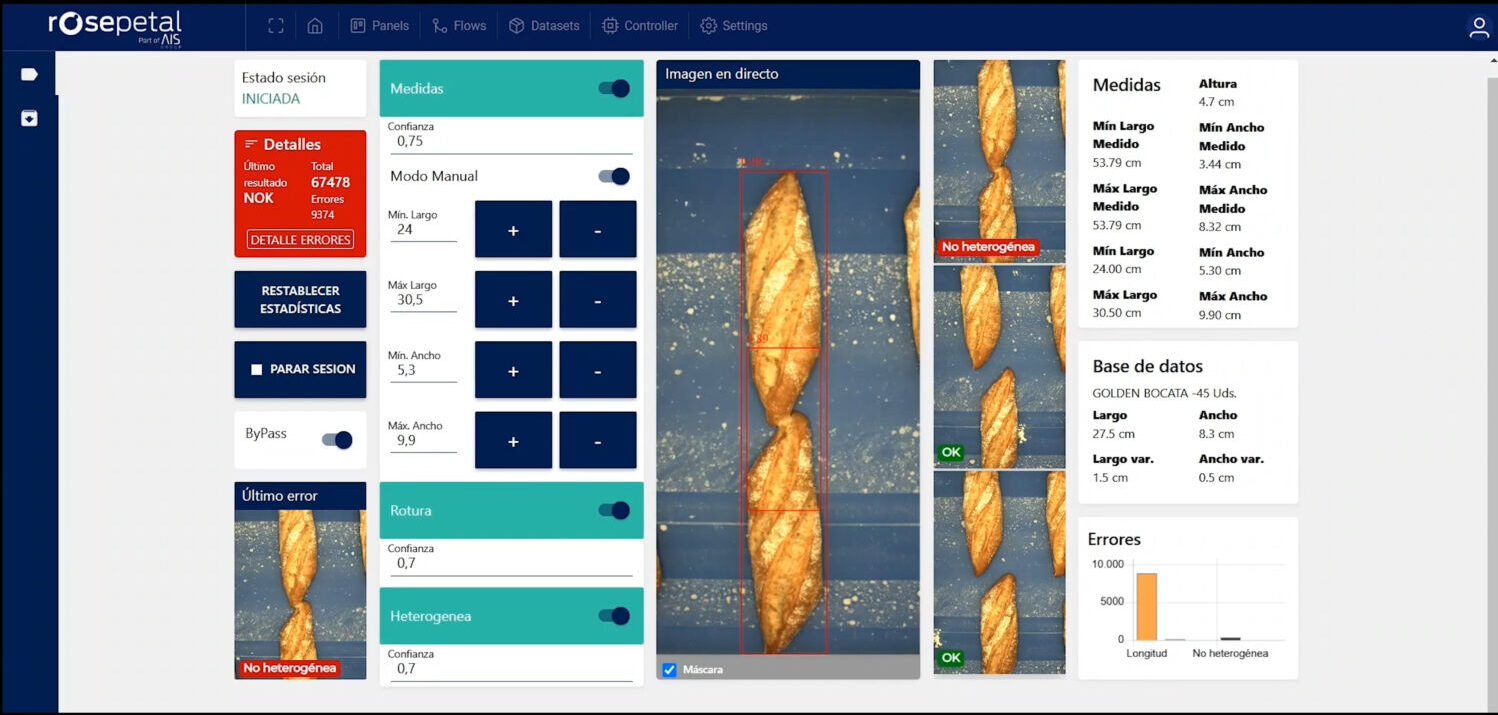
When the defect is variable or hard to define —organic products, textures, irregular finishes— traditional rules fall short. Inspection systems with neural networks (deep learning) learn from examples of good and defective parts and generalise to new cases. This automates inspections that only an expert could once judge.
When to choose each approach
For well-defined measurements and defects, rule-based vision is fast and precise. For natural variability or “fuzzy” defects, deep learning adds robustness. The usual choice is to combine them in a single inspection platform to cover the full spectrum of defects.
At AIS Vision Systems we integrate our inspection platform with deep learning models to automate your quality control. Tell us your case and we’ll design the inspection to measure.