
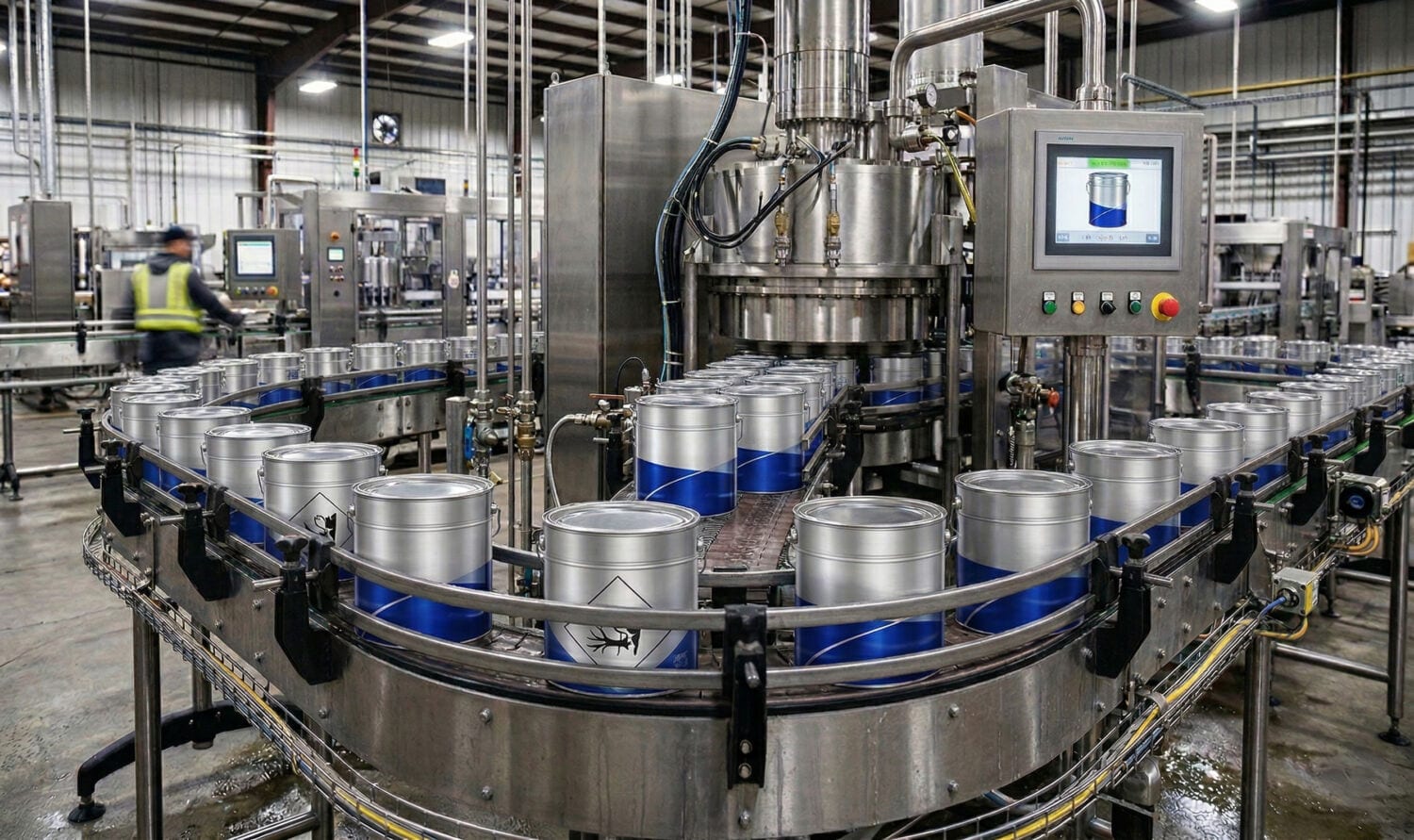
A modern visual inspection system can detect flaws that would go unnoticed by the human eye, and do so on every unit that passes down the line. These are the seven most common types of defect that machine vision identifies and rejects in real time.
1. Labelling and positioning defects
Misplaced, crooked, missing, folded or bubbled labels. The system checks that every label is present and correctly positioned 360º around the container.
2. Print and design defects
Blurred text, missing characters, wrong colours or shifted printing. The inspection compares the printed design with the master file to catch any deviation.
3. Colour and appearance defects
Tone variations, stains, streaks or lack of uniformity. Especially important for products where appearance is part of perceived quality.
4. Shape and dimension defects
Deformed parts, out-of-tolerance items or incorrect measurements. Vision metrology measures with sub-millimetre precision and without contact.
5. Sealing and heat-sealing defects
Incomplete seals, wrinkles or contamination in the closure area. A failure here compromises product preservation and safety.
6. Assembly and mounting defects
Missing, poorly fitted or swapped components. The system verifies that every part is where it should be and in the right order.
7. Code defects (1D/2D)
Unreadable, low-quality or wrong barcodes or DataMatrix codes. Code inspection and verification prevents traceability problems and returns.
At AIS we detect these and many other defects with custom systems. Request a demo with your own products.