
Food traceability requires marking every product with batch, date and code in an indelible, legible way. For years this was done with ink, but laser marking is quickly gaining ground. Let’s look at why laser is replacing ink and the role machine vision plays.
Why traceability matters in food
Regulations (such as the EU general food law) require being able to track every product across the chain. A badly marked or illegible code breaks that chain and can cause recalls.
Laser versus ink
- No consumables: laser uses no ink or solvents; lower recurring cost and less maintenance.
- Permanence: laser marking doesn’t smear or wipe off, ideal for humid or cold environments.
- Sustainability: eliminates ink waste and cartridges.
- Sharpness: high-quality DataMatrix codes, easier to read and verify.
Ink is still valid in many cases (porous substrates, high speed, colour), but laser is increasingly the default choice for traceability.
The role of machine vision
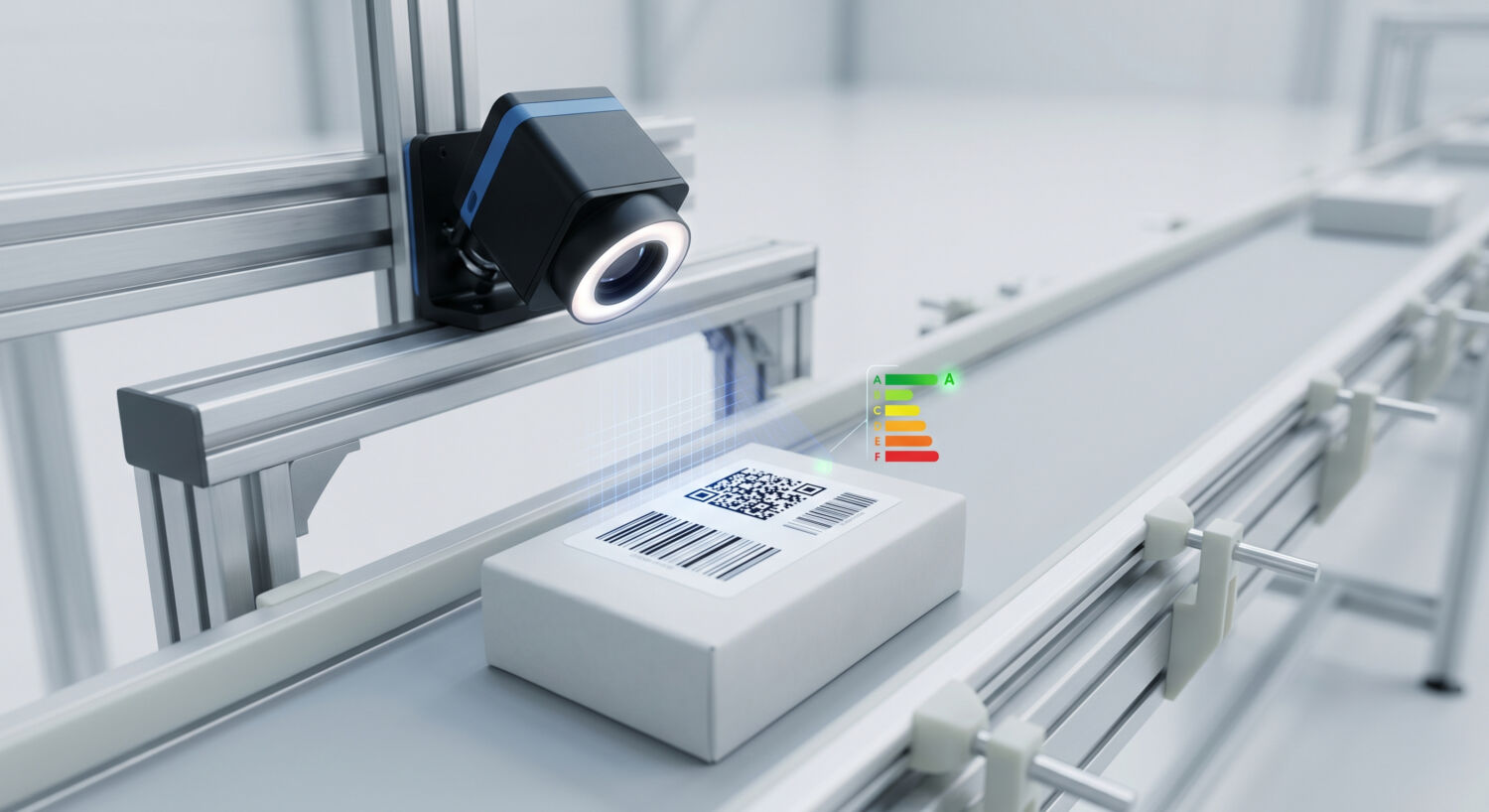
Marking isn’t enough: you have to verify. Machine vision reads and validates every code (OCR/OCV and DataMatrix grading), guaranteeing that the mark —laser or ink— is correct and legible. Without verification, there’s no reliable traceability.
At AIS Vision Systems we verify marking and traceability with verification and OptiCAIS. Tell us about your marking process.